Tag: lisa murkowski
Senate Republicans Enraged Over Trump Endorsement Of Lone Star Sleazebag Paxton

Senate Republicans Enraged Over Trump Endorsement Of Lone Star Sleazebag Paxton

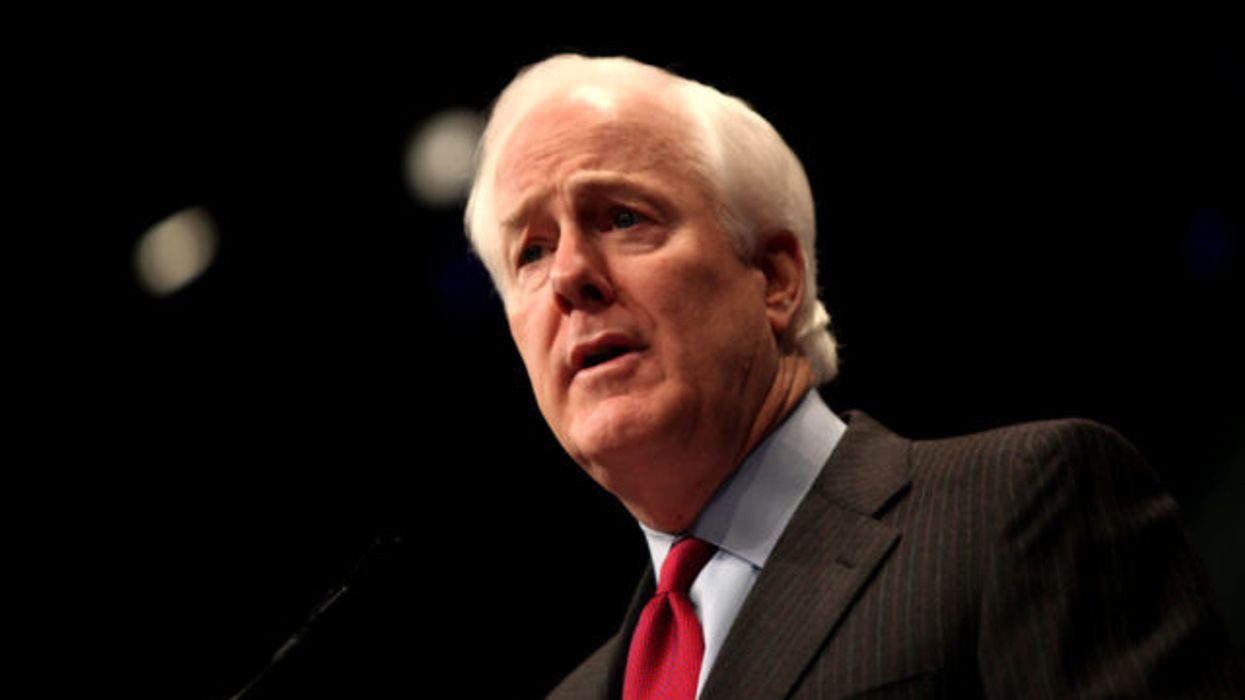
President Donald Trump’s 11th-hour endorsement in the Texas GOP primary went to far-right Attorney General Ken Paxton over establishment Republican Sen. John Cornyn, dealing a severe blow to the lawmaker’s chances, angering some prominent GOP lawmakers, and likely boosting the chances of underdog Democrat James Talarico winning the seat in the red Lone Star State.

“Ton of concern among GOP [senators] about Trump’s endorsement of Paxton,” CNN’s Manu Raju reported. “Fear it will cost them a lot more money to save a seat in a red state.”

Sen. Lisa Murkowski (R-AK) said that Trump’s Paxton endorsement “puts that seat in jeopardy” and asked, “how does that help strengthen the president’s hand when we lose a state like Texas?”

“Supremely disappointed,” is how she characterized her reaction.

Sen. Susan Collins (R-ME) declared Paxton is “an ethically challenged individual,” reports Semafor congressional bureau chief Burgess Everett.

“John Cornyn is an outstanding senator and deserved, in my judgment, the president’s support,” she said. “Obviously, it’s the president’s call, but I’m disappointed that he did it.”

Sen. Lindsey Graham (R-SC), a top Trump ally, said, “I think Paxton can win. I think it’d be three times more expensive.”

Sen. Ron Johnson said he was “speechless” and added, “I really have no comment.”

Described as “not happy looking,” Republican Senate Majority Leader John Thune (R-SD), who has supported Sen. Cornyn, acknowledged it was President Trump’s decision to make.

Punchbowl News’ Andrew Desiderio reported that Thune was “stone-faced” after the endorsement, and appeared “pretty deep” in anger.

“Most GOP senators really want him to endorse Cornyn,” Everett had reported about 90 minutes before the Trump-Paxton endorsement dropped.

Sen. Steve Daines (R-MT) had said, “I would like to see him support John Cornyn in Texas. I’ve made that clear.”

Sen. Joni Ernst (R-IA) had said, “I am hopeful that he backs Sen. Cornyn. John has been a steadfast ally of the president and I hope the president sees that.”

Congressional reporter Jamie Dupree described U.S. Senator Roger Wicker’s (R-MS) response as “stone cold silent.”

Professor Larry Sabato, director of the University of Virginia’s Center for Politics, called Trump’s endorsement of Paxton “Great News for Talarico,” “Bad News for GOP money reserves,” and declared, “If ever there’s a year when a D can win statewide in TX, it’s 2026.”

Talarico responded to the Trump endorsement: “As I said on primary night, it doesn’t matter who wins this runoff. We already know who we’re running against: the billionaire mega-donors and their corrupt political system.”

Reprinted with permission from Alternet
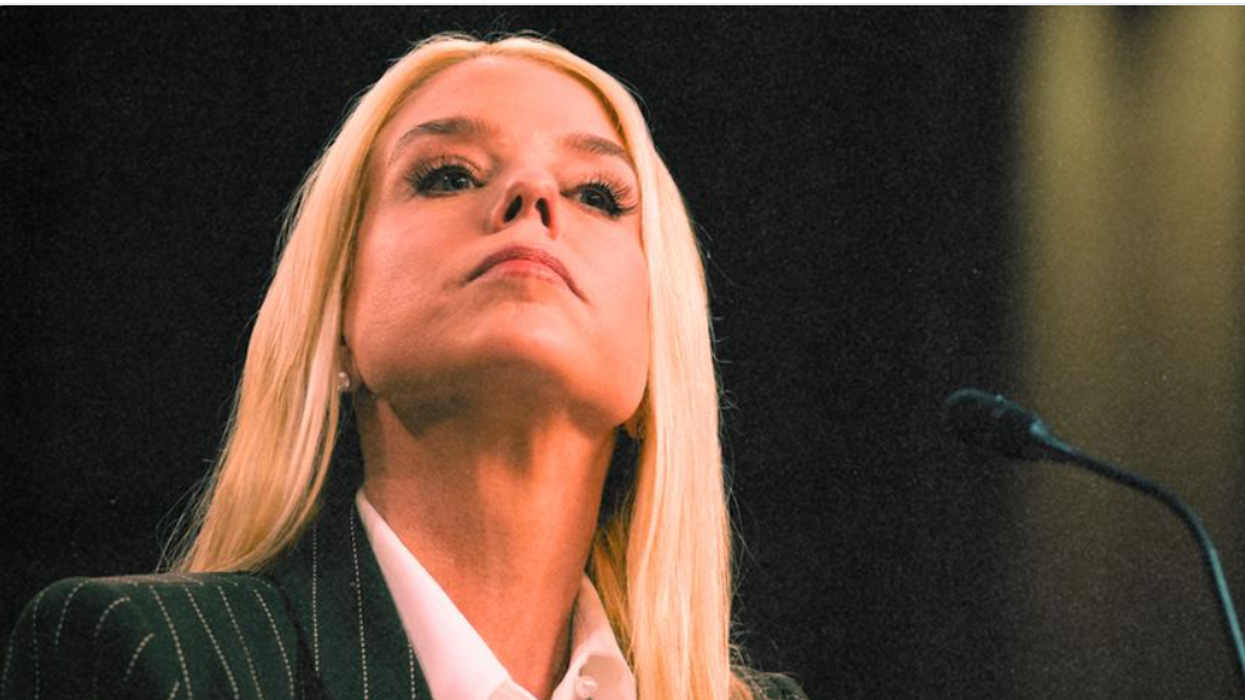

Bondi's Delay In Epstein Files Disclosure Irritates Bipartisan Congressional Group

Bondi's Delay In Epstein Files Disclosure Irritates Bipartisan Congressional Group

A bipartisan group of congressional leaders has asked Attorney General Pam Bondi for a briefing on when, exactly, she’s going to get around to releasing the Epstein files.

They picked a good day to send a letter to Bondi, as the House Oversight Committee Democrats just released a trove of pictures and videos from Jeffrey Epstein’s private island, including an incredibly creepy photo of a room with what appears to be a dentist’s chair and multiple deeply weird wall hangings.

They also reportedly plan to release records from J.P. Morgan and Deutsche Bank soon.

The administration is no doubt incandescent with rage that two Republicans—Sen. Lisa Murkowski of Alaska and Rep. Thomas Massie of Kentucky— signed onto this letter. But it’s not surprising, given that they were two lead sponsors of the Epstein Files Transparency Act.

The letter was also signed by several Democrats—including Sen. Jeff Merkley of Oregon, Sen. Ben Ray Luján of New Mexico, and Rep. Ro Khanna of California—who might be particularly interested in a new investigation focused solely on Democrats.

All of these Democrats need to be investigated, you see, because of “information [that] has come forward, new information, additional information,” according to Bondi.

But it’s far more likely that this so-called investigation is just Bondi doing President Donald Trump’s bidding.

Trump very much wants to target Democrats, but he also very, very, very much wants to hide any potential mention of him in the Epstein files. After being battered with bad headlines, Trump went on Truth Social to demand Bondi investigate Epstein’s connections to “Bill Clinton, Larry Summers, Reid Hoffman, J.P. Morgan, Chase, and many other people and institutions, to determine what was going on with them, and him.”

Still, Bondi claims that she’s not doing this at the behest of Trump, but because of all that new information. That’s basically an invitation for members of Congress to say, “Well, do tell!” But since it’s highly likely that Bondi doesn’t actually have anything, she’ll probably refuse to respond by December 5, as the letter requests.

It’s also quite possible that this brand-new investigation is just an attempt to stall. The law mandating the release of the Epstein files has a giant loophole, allowing the DOJ to withhold anything that might jeopardize an active federal investigation. So it’s pretty convenient that there’s suddenly an active federal investigation.

It was never a question of whether the administration would try to dodge the 30-day deadline to release the files, but rather a question of how it would go about it. Looks like we’ve found out.

However, with both parties keeping the pressure on and Democrats’ steady drip, drip, drip of files, Bondi is going to have to work really hard to protect her boss—and she can’t keep “investigating” forever.

It’s clear she knows that a reckoning is coming. She can delay it, but she can’t stop it.

Reprinted with permission from Daily Kos

Nearly Every GOP Senator Votes Against Right To Contraception Act

Nearly Every GOP Senator Votes Against Right To Contraception Act

Sure, the Republican Party wants to convince voters they really aren’t that radical when it comes to reproductive rights. But voting against a bill to protect access to birth control isn’t the way to do it.

On Wednesday, almost every Senate Republican voted to block the Right to Contraception Act—legislation that should be uncontroversial and unobjectionable. Only two Republicans, Susan Collins and Lisa Murkowski, voted to let the bill move forward.

“The right to contraception is a fundamental right, central to a person’s privacy, health, wellbeing, dignity, liberty, equality, and ability to participate in the social and economic life of the Nation,” the bill states. So yes, you can see why Republicans—who don’t value any of those things—took issue with it.

Of course, that’s not the justification they’re giving.

“This is a show vote. It’s not serious,” Texas Sen. John Cornyn said. “It’s a phony vote because contraception, to my knowledge, is not illegal. It’s not unavailable.”

Sure, it’s not illegal or unavailable now. But that’s hardly the point.

The point is that there are plenty of Republicans who’ve said it should be illegal or at least unavailable or at least highly restricted.

One of those Republicans is Donald Trump. Perhaps Cornyn’s heard of him? Just last month, Trump said that contraception, like abortion, should probably be decided by the states. He also promised a “very comprehensive” plan he’s yet to deliver.

Another one of those Republicans Cornyn might know? Supreme Court Justice Clarence Thomas, who has not been quite as explicit as Trump. But pretty close. In his concurring opinion in Dobbs v. Jackson Women’s Health—the case that overturned Roe v. Wade—he wrote that the court should next overturn Griswold v. Connecticut, the case that recognized a right to birth control.

And it’s because of those threats to birth control that Senate Democrats want to act now to protect the right to contraception before it’s too late.

"Today, we live in a country where not only tens of millions of women have been robbed of their reproductive freedoms. We also live in a country where tens of millions more worry about something as basic as birth control," Majority Leader Chuck Schumer said Wednesday. "That's utterly medieval."

It’s not just utterly medieval; it’s also a threat. First, abortion and next up: birth control.

"If Roe v. Wade can fall, anything can fall,” House Minority Leader Hakeem Jeffries said in a recent “60 Minutes” interview. That’s the lesson Democrats have had to learn the hard way.

The lesson Republicans are now learning the hard way is that fighting to get rid of a freedom the majority of Americans supports is really unpopular. Really super very unpopular. Which is why they’ve been scrambling to find a way to talk about it without sounding like the radical extremist freaks they are.

And it’s why Senate Republicans are now pretending they don’t have a problem with contraception—they just don’t like the bill to protect it.

“We will have an alternative that will make very clear that Republicans are for contraception,” GOP Whip John Thune said. Yeah, sure they will. And what will make their bill better?

According to Iowa’s Joni Ernst, who’s supposedly working on her own bill, it will be better because it will cover less contraception. No, that’s not a joke.

“It does not include Plan B, which many folks on the right would consider abortive services,” she said. The fact that “many folks” consider emergency contraception “abortive services” does not make it so. And that’s according to actual doctors, not radical right-wing activists.

But it’s those radical right-wing activists Republican senators can’t resist, even as they’re trying to convince voters they really aren’t that radical. So they’ve blocked a bill to protect contraception, with only the empty and vague promise to voters that there’s no need to worry, it’s perfectly safe. For now.

Reprinted with permission from Daily Kos.

Is There Any Way To Isolate Political Extremists? Yes

Is There Any Way To Isolate Political Extremists? Yes

There is probably no easy cure for the Marjorie Taylor Greene phenomenon. She's a repellent clown whose presence on the national stage has yielded nothing but degradation — except for the guffaw she afforded us when denouncing Nancy Pelosi's "Gazpacho police."

And she has lots of company. Her colleagues in the House include Paul Gosar and Matt Gaetz and Lauren Boebert and Louie Gohmert and, sigh, many more. And even among the members who probably do know the difference between the Nazi secret police and a summer soup, there are alarming numbers who are extremist-adjacent. There are, for example, more sitting GOP congressmen who voted not to certify the 2020 election than there are Republicans who voted for a resolution to support NATO.

Democrats are not immune to the extremism virus either. While the Democratic Party hasn't lost its bearings in the way the Republican Party has, it is skewed by its own zealots. In the 2020 presidential primaries, for example, progressive activists pushed candidates to impose a moratorium on deportations, to abolish private health insurance and to ban fracking, among other demands. Those issues weren't top of mind for average Democrats, let alone for average voters.

In the pre-Internet era, our political parties seemed to be bulwarks of stability. But that has long since ceased to be the case. Rather than forming, directing and discipling their members, these institutions have become hollow shells. Unable to control fundraising due to the rise of small-dollar, internet contributions, and stripped even of the formerly coveted power of attaching earmarks to legislation, the parties, as Yuval Levin has argued, are mere soapboxes that permit members to flaunt their personal brands.

The party duopoly empowers the most extreme voters and leaves the vast middle unrepresented and feeling that in general elections they must choose the lesser of two evils. As Katherine Gehl, founder of the Institute for Political Innovation, notes, about 10 percent of voters (those who vote in primaries) determine the outcome of 83 percent of congressional races. And because primary voters tend to be more ideological and extreme than others, candidates pander to them to get elected and then to remain in office. The term "primary" became a verb only in the last decade or so, as the power of the party zealots became a cudgel to use against any member who even considered compromising with the other party.

There's one more factor aggravating the lurch to extremism, at least among Republicans (Democrats have different rules), and that's the winner-take-all system in presidential primaries. In 2016, Donald Trump lost Iowa and then won New Hampshire with 35 percent of the vote. A solid majority, 57 percent, was divided among five other candidates.

So, are we doomed to be at the mercy of the mad and bad? It's possible, but then again, one reform that seems to be getting traction is ranked-choice voting (also known as instant runoff elections).

It's already the law in Alaska and Maine for state, congressional, and presidential contests and has been adopted by more than 20 cities. In Virginia, the Republican Party used a ranked-choice system to choose its gubernatorial candidate in 2021, with the result that Glenn Youngkin rather than Amanda Chase ("Trump in heels") secured the nomination. In New York City, predictions that the city's 5.6 million voters would find the ranked-choice system confusing were not borne out. Turnout was up compared with the last contested mayoral primary, and 95 percent of voters said the system was easy. There were no differences among ethnic groups in understanding the system, and the winner was a moderate former cop.

There are many different approaches to ranked-choice voting, and experimentation will determine which is best. But even with the small sample we have, we can judge that the incentives seem better. Among the three GOP senators who voted to confirm Ketanji Brown Jackson to the Supreme Court, only one is up for reelection in 2022 — Lisa Murkowski of Alaska. Murkowski could uphold the norm of confirming the other party's qualified nominee and not fear a Trumpist primary challenger because Alaska now holds an open primary in which anyone from any party can participate. The four candidates who win the most votes go on to the general election. Voters rank their choices. If one candidate gets over 50 percent, he or she is the winner. If not, the bottom polling candidate is dropped, and the second choices on ballots are distributed, and so on until someone has a majority.

Not only does the ranked-choice system disempower party extremists; it also discourages candidates from savage personal attacks, the persistence of which arguably keeps some fine people out of politics altogether.

The two-party system has not proven to be a solid foundation for democracy. Time to disarm the crazies.

Mona Charen is policy editor of The Bulwark and host of the Beg to Differ podcast. Her most recent book is Sex Matters: How Modern Feminism Lost Touch with Science, Love, and Common Sense. To read features by other Creators Syndicate writers and cartoonists, visit the Creators Syndicate webpage at www.creators.com.

Shop our Store

Headlines

Editor's Blog

Corona Virus

Trending

World